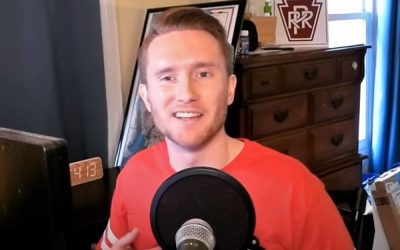
Alan Fisher – the Armchair Urbanist on walkable cities, the disaster of autocentrism, transit, and planning sustainable cities
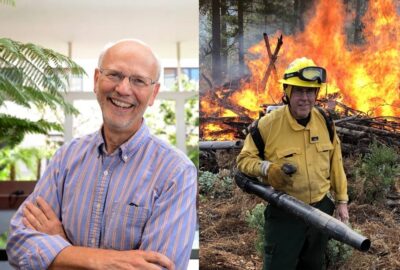
Alan Fisher grew up in Southern New Jersey, eventually moving to New Brunswick, NJ for college at Rutgers University, where he studied Mechanical Engineering. While living in New Brunswick he had access to New Jersey transit trains and Amtrak trains on the...
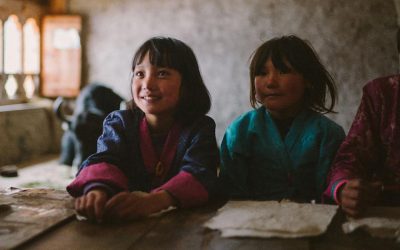
The Film Gang Review: Lunana: A Yak in the Classroom
Movie award season is inherently ephemeral. Even diehard film buffs would be hard pressed to recall all of the winners at this year‘s Oscar ceremony, let alone the nominees, and the nominations for Best International Feature seem to fade from memory the...
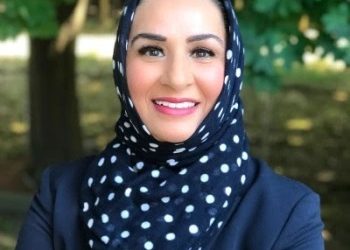
Sustainability Now! Sunday, June 12th: Meet the Monterey Bay Economic Partnership, with Tahra Goraya
Meet the Monterey Bay Economic Partnership with Tahra Goraya On Sustainability Now! Sunday, June 12th, 5-6 PM on KSQD 90.7 FM and KSQD.org Sustainability Now! co-host Brooke Wright speaks with Tahra Goraya, the new President & CEO of the tri-county Monterey Bay...

Brian Hansen – Stolen Car
Brian Hansen, a software engineer, uses his creative mind to solve a mystery. (Read by Sami Corn) Produced by Laurie Corn.

Laurie Corn – Almost Famous
Laurie Corn tells the story of how she was almost famous.
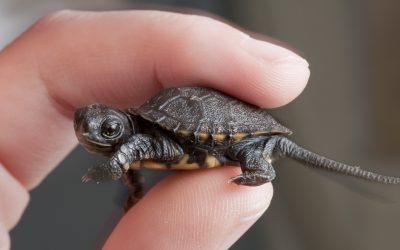
Saving Western Pond Turtles at SF Zoo
The San Francisco Zoo has all sorts of animals on display… lions, koalas, lemurs. [loud lemur noises] But the zoo also cares for animals hidden from the public eye… like western pond turtles. I’m McKenzie Prillaman, a science reporting intern at KSQD. Western pond...
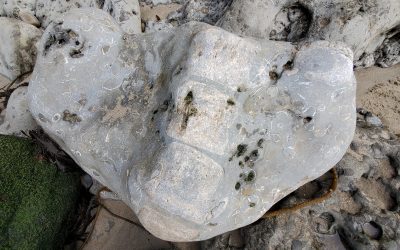
Amateur Fossil Hunters are Big Contributors to Science
Host: People here in Santa Cruz are part of a growing field called community or citizen science. For the region’s amateur fossil collectors, their finds might just help paleontologists figure out what life was like millions of years ago right here on the central...

Panel discussion: the role abortion plays in comprehensive medical care
Sometimes amongst the back and forth of politics the real people being affected by our laws get lost in the shuffle. Our guests on this episode see abortion care up close and extremely personally. Host Suki Wessling is joined by three abortion care specialists:...
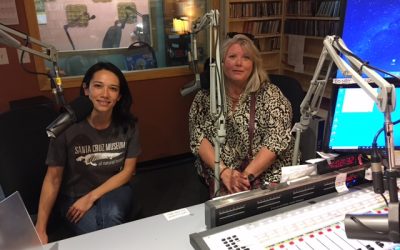
Santa Cruz Museum of Natural History
Host Mathilde Rand explores the environmental educational programs at the Santa Cruz Museum of Natural History with Felicia van Stolk, executive director, and Kiersten Elzy-Loving, Development and Community Partnerships Manager. The museum’s mission is to connect...
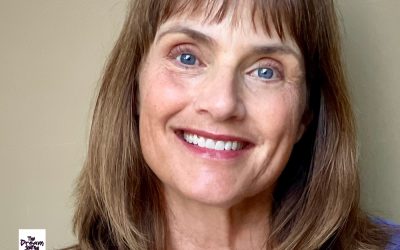
Safety is the Treatment, with Leslie Ellis, PhD
We speak about nightmares and the nervous system using an approach combining polyvagal theory and embodied experiential approaches including Gendlin's practice of Focusing. She argues that learning to find a sense of safety is not just necessary for treatment to...

Gillian Greensite – No on Measure F
Gillian Greensite talks Measure F in Santa Cruz.
inflammatory skin conditions and muscle physiology, plus much more
New UV therapy for a variety of inflammatory skin conditions; Inflammasomes are multiprotein complexes of the innate immune system responsible for the activation of inflammatory responses; COVID-19 vaccine booster timing with other vaccines such as shingles; Detailed...
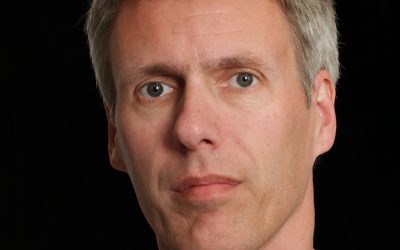
Escaping The Rabbit Hole with Mick West
“Escaping The Rabbit Hole: How to Debunk Conspiracy Theories Using Facts, Logic, and Respect” “Be Bold America!” Sunday, June 5, 2022 at 5:00pm (PDT) “The conspiracy theory rabbit hole is a complicated place, and the people are complicated individuals.” – Mick West...
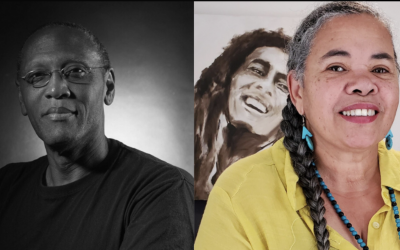
Reverend Audri Scotts Williams on Moment of Truth with Alvin
Moment of Truth with Alvin on June 2, 2022 welcomes back Reverend Audri Scotts Williams, Spiritual Director of the Spiritual Enrichment Center in Dothan, AL. From the pandemic to a crisis of democracy, from political turbulence to the climate crisis, how can we stay...
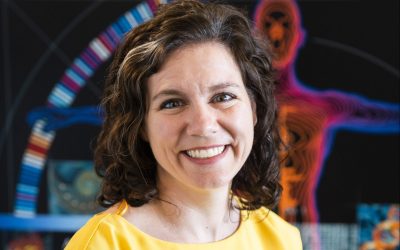
UCSC’s Karen Miga: 1 of 100 Most Influential People of 2022
Host: For years, scientists have sought after the blueprints for human life—the entirety of our DNA—called a genome. Knowing how it’s arranged would help researchers and doctors understand diseases. Scientists mostly succeeded in 2003 when the Human Genome Project...