
Episode 63: Prepare for an eye-opening exploration of the intricate realm of Dissociative Identity Disorder (DID), a psychiatric condition previously known as multiple personality disorder. This episode delves into the widespread misunderstandings surrounding DID, not only among the general public, but also within the community of mental health professionals.
DID affects only about 1.5% of the global population, so many clinicians do not encounter a person with the condition during their training, and its portrayal in the media often sensationalizes and inaccurately represents the disorder. This episode aims to demystify DID, shedding light on the realities faced by individuals who grapple with this complex condition.
The roots of DID lie in a history of severe childhood abuse, leading many to dissociate from their bodies as a coping mechanism for overwhelming trauma. The consequences are profound: individuals often experience serious mental health symptoms such as self-injurious behavior, suicide attempts, and substance use problems.
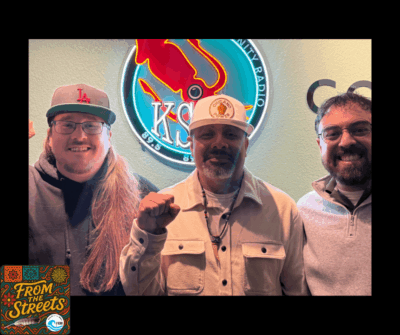
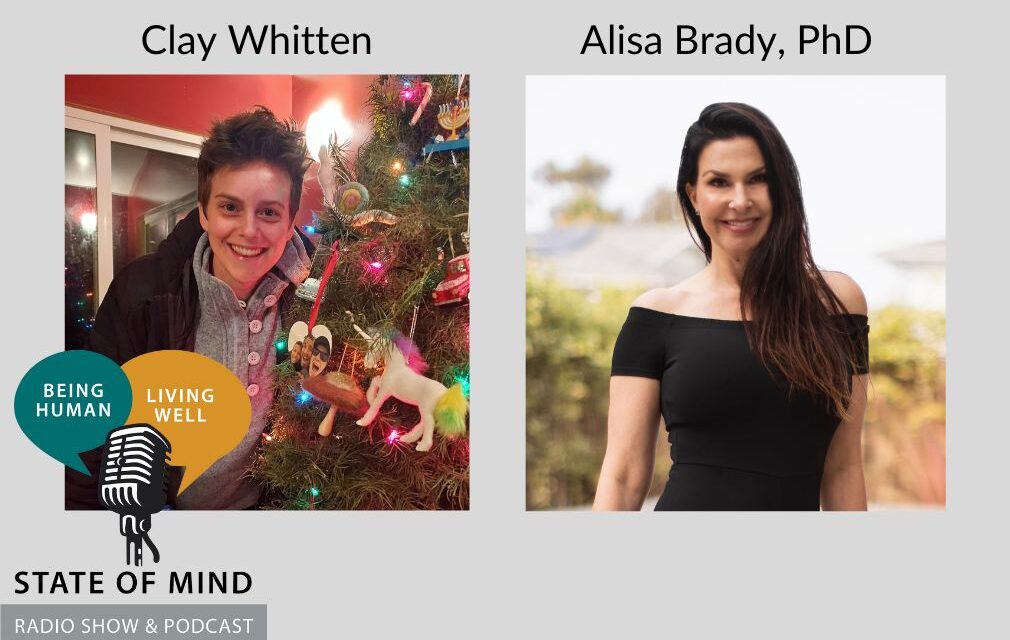
What adds to the challenge is the frequent misdiagnosis of DID. Patients typically/often endure 5-12.5 years in treatment before anyone accurately identifies this condition. Joining us for this conversation are Dr. Alisa Brady, a clinical psychologist and trauma specialist, and Clay Whitten, who lives with DID. Together, they share firsthand experiences and up-to-date insights into this often-misunderstood condition. Clay additionally discusses how an approach called Internal Family Systems (IFS) therapy has helped them. and played a pivotal role in their recent progress.
Tune in as we navigate the layers of Dissociative Identity Disorder to foster understanding, compassion, and awareness. This episode seeks to debunk myths, and provide an open dialogue about DID as well as offer helpful resources. Join us on this enlightening journey of empathy and education.
Producer & Host: Debra Sloss, LMFT
Guests: Clay Whitten & Alisa Brady, PhD
Broadcasts: 2/4/24 & 2/12/24
🎧 LISTEN & SUBSCRIBE
Never miss an episode!
Apple Podcasts / Spotify / Amazon Music / YouTube Podcasts / Pandora / TuneIn
Enjoyed the episode? Leave a review to help others discover us.
📚 ACCESSIBILITY
Transcription. Read the full English transcript of this episode here:
English Transcription – Episode 63: Inside Dissociative Identity Disorder
Closed Captions. Prefer to watch with captions?
View/Listen on YouTube and turn on the closed captioning feature in the settings.
🤝 ENGAGE WITH US
Join Our Email List
Want to know our topic each month? Sign up here.
Suggest a Topic or Share a Story
Do you have a story or topic idea? Email: debra.stateofmind@ksqd.org
Follow Us
Facebook & Instagram: @stateofmind.radioandpodcast
Submit an “In Your Voice” Listener Segment
Share your 1–3 minute message about a personal mental health experience or recovery resource.
Call: 831-824-4324, Or record on your phone and email to stateofmind@ksqd.org
❤️SUPPORT OR UNDERWRITE
Love State of Mind and KSQD? Become a supporter or underwrite the show to reach a thoughtful audience. Learn more at KSQD.
🧠ABOUT STATE OF MIND
State of Mind is an all-volunteer produced mental health and wellness podcast and radio show hosted by psychotherapist Debra Sloss. Through intimate, story-rich conversations with guests and experts, we explore the complexity of being human and how to live well. Learn more at stateofmindmedia.org. Produced with support from KSQD Community Radio.
🙏 SPECIAL THANKS
Audio Production: Jeanne Baldzikowski
Story Coaching: Patrice Vecchione
Transcriptions: Pati Palmer
Theme Music: Adrian Legg and Favored Nations Entertainment
RESOURCES:
* Indicates a Monterey Bay Area Resource
DiD Support
The Ivory Garden – An online forum where you can meet others with DID, read posts, or write on the forum to receive feedback. It is a compassionate space that invites asking questions, sharing experience, or starting conversations with others who “really get it.”
Multiplied by One – A website that offers a comprehensive list of DID specific resources including DID podcasts, more information on the diagnosis, and a magazine. They also offer support groups for those with DID or DDNOS, family members or supporters, and many others.
NAMI (National Alliance on Mental Illness) National – an organization and website providing extensive free education and support, advocacy and resources for persons with mental health issues and their families and friends. While NAMI is a national organization, they have local chapters and offer free support groups and share the local resources for mental health support.
* NAMI (National Alliance on Mental Illness) Santa Cruz – Santa Cruz local chapter that provides free support groups and education classes for persons with mental health issues and their families and friends. All services are free to access.
RAINN (Rape, Abuse & Incest National Network) – the nation’s largest anti-sexual violence organization. RAINN created and operates the National Sexual Assault Hotline in partnership with more than 1,000 local sexual assault service providers across the country and operates the DoD Safe Helpline for the Department of Defense. RAINN also carries out programs to prevent sexual violence, help survivors, and ensure that perpetrators are brought to justice.
Hotlines & Warmlines
| Crisis Lines | 988 Suicide and Crisis Lifeline—Call or Text 988
Crisis Text Line—Text “Home” to 741-741
RAINN National Sexual Assault Hotline—Call 1-800-656-4673
SAMHSA’s National Helpline—Call 1-800-662-4357
|
| Warmlines | California Peer-Run Warmline—Call or Text 1-855-600-WARM
National Alliance on Mental Illness—Call 1-800-950-6264 or Text “Helpline” to 62640
|
Trauma Treatment
Wings Recovery – An intensive mental health treatment facility that provides gender-specific treatment and focuses on the treatment of trauma and dissociation.
Phone: (888)790-9377
Media & Additional Reading
Petals of a Rose – This is a short film (about 15 mins) that is a helpful tool for sharing with friends and family about what DID is and what it is like to be in the head of someone with DID. This film does a great job of portraying the truth about what DID is and why it happens. There are two variations, one with a triggering scene and a redacted version.
Coping with Trauma-Related Dissociation: Skills Training for Patients and Therapists by Suzette Boon, Kathy Steele & Onno Van Der Hart (1st Edition) – This book is a good resource for therapists and clients and gives specific strategies for managing dissociation.
EMDR and Dissociation: The Progressive Approach by Anabel Gonzalez & Dolores Moscuera (2012) – This book is mainly for clinicians and gives great insight into dissociation and strategies for helping people heal.
Separating Fact from Fiction: An Empirical Examination of Six Myths About Dissociative Identity Disorder – Source: National Institute of Health’s National Library of Medicine. Harvard Rev Psychiatry. 2016 Jul; 24(4): 257–270. Published online 2016 Jul 8.
Clay’s Personal Recommendations
Coping Skill Cards: I worked with my therapist on making cards that help me when I’m having a hard time. One side may say: “when dissociating”, or “when struggling with urges” and the other side can offer many coping skills that can help me in the moment. These are especially helpful when my thinking brain is offline. If I can get a part to look and use the card, I can then curb a lot of unwanted behavior and choose a positive one that is on the card.
General Counseling Support
*Family Service Agency (FSA) of the Central Coast is a dedicated underwriter of State of Mind. FSA provides resources, support, and counseling services to adults and children. FSA believes in the power and potential of people of all ages and backgrounds to discover their own creative solutions and welcomes people of diverse cultures, genders, sexual orientations, ages, faiths, socio–economic backgrounds. FSA Counseling Offices offer Medi–Cal, Medicare, and low–cost, sliding scale services in both downtown Santa Cruz and Soquel.
Phone: 831–423–9444 ext: 200 and in Soquel 831–346–6767 ext: 200.
*Shine a Light Counseling Center – Offering quality, affordable counseling at offices in Santa Cruz, Watsonville and Monterey. The center provides individual, family, couple and group counseling, including men’s groups.
Phone: 831-996-1222
* Indicates a Monterey Bay Area Resource