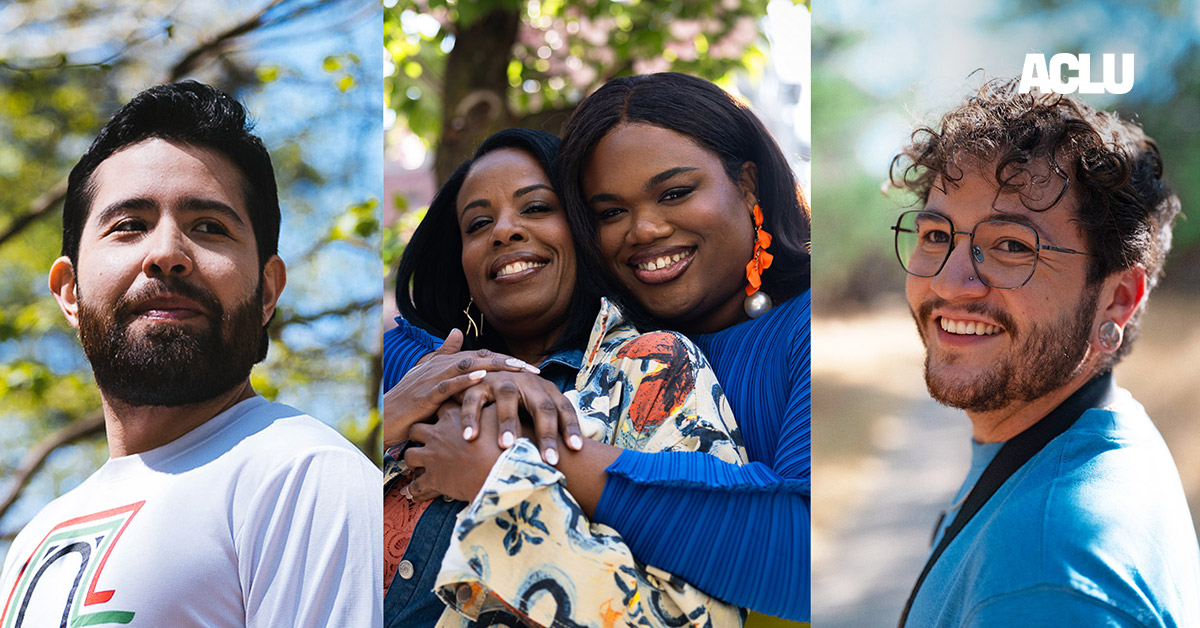


Hello, I’m Daymia Rousseau, a UCSC Intern reporting for KSQD. The Trump Administration’s attacks on DEI programs have hit especially hard when it comes to access to gender affirming care for trans youth. Regardless of the intense pressure on schools by the Department of education to remove all forms of “gender ideology”, many schools and healthcare settings are challenging this position and moving to protect trans youth.
Adam : “There are implicit and explicit impacts that trans youth, and trans young adults, are experiencing right now. The explicit ones…are that Gender affirming care is becoming more difficult to come by if you are a transgender person under the age of 18. Even in our area. ”
That’s Adam Spickler. Adam is a trans man, and a member of Cabrillo College’s board of trustees, an elected member of the Santa Cruz Democratic Party, and is currently involved with the Queer Youth Task Force. Given Adam’s credentials,, I asked him how Trump and the GOP’s incentive to target “gender ideology” has impacted the community.
Adam “So, if you are a young person in Santa Cruz county, who in the …last 9 months…has realized that your gender identity might require – gender affirming care. For the first time ever, having a conversation with your doctor is pretty scary. And not knowing whether your doctor is affiliated with a healthcare providing agency that offers gender affirming care, you might have less information provided to you. Because healthcare affiliates and healthcare providers, understandably, are scared to get flagged in a larger way, as ‘providing’ gender affirming care. …We’ve watched how the federal government has gone after them, legally, and illegally. Threatening to withhold grant money if they do provide gender affirming care.”
So, healthcare providers are hesitant to advertise that they offer gender affirming due to the potential financial risk & political backlash from the federal government – regardless of whether they actually provide it or not; therefore limiting its accessibility. Or, as was the case this August at the Children’s Hospital Los Angeles, preemptive measures may be taken by healthcare providers in the wake of the administration’s demands, regardless of their legality. Difficulty getting a passport that matches one’s identity and reducing health access are two explicit threats, but equally concerning are the attempts to erase trans identities. Again, Adam Spickler.
Adam…But the implicit messages that are part of, and go beyond those two things, are the ways in which permission is being given. At best, to be dismissive in acknowledging trans identities. And, at worst, being violent… that is on the rise.”
Adam’s comments made me especially curious about the ways in which trans youth and elders are able to circumvent these changes. Being a prominent trans figure in the Santa Cruz community,
Adam : “… I have been terrified of the reality of being trans like I never have been before… I have never been more aware than I have been, the last few months, of what it must feel like, all of your life, to be visibly marginalized. …Having such a target on our backs now, from white nationalists…from people who feel emboldened to call transgender people ‘terrorists’ – completely wrong…but to be utilizing that false information to target trans people in a really scary government, at the same time the federal government wants to give credibility to those claims…And it is terrifying in a way I never understood until it was happening to me.”
Adam points out that different groups, depending on ethnic identity, may experience these impacts in different ways. This is especially relevant when you consider that DEI programs, of which are under direct attack from the department of education, encompass all these concepts under that umbrella term; intersecting in complicated ways. So how is the current What can we learn by comparing them?
Sandy : “We’ve been here before…and, undoubtedly, we’ll be here again!”
That’s Sandy Stone, an audio engineer, artist, educator, activist, and one of the core founders of transgender studies. Beginning in the 1960’s, Sandy has had a long career in music production, as well as academic & critical writing. She is currently our engineer here at KSQD. She transitioned at a time when gender affirming care was virtually nonexistent. Nonetheless, her career advanced despite transphobic attacks against her, resulting in the seminal work, “The trans manifesto”. She has a unique perspective on how trans youth can cope with modern forms of oppression & erasure.
Sandy “I’ve been talking about this for at least two years…when Trump took office this year…I’ve been saying, ‘we’re gonna get kicked back!..We’ve made ten steps forward…We’ve solidified a lot of stuff. And now we’re gonna be beaten back about 6 steps. And it’s gonna hurt, it’s gonna be painful, people are gonna suffer – people are gonna die. But at the end of the day, we’re still gonna be 4 steps forward. We’ve got trans academics, we’ve got trans doctors, we’ve got trans doctors, we’ve got trans attorneys. We didn’t have those before, that’s all something we’ve gone tooth and claw to get. And, of course, some of that is gonna go away, and a lot of what we do is under attack. Particularly, in the area which we call ‘trans healthcare’.”
Speaking for myself, as a trans woman, these issues have always plagued me in professional, medical and social settings. Sandy delved deeper into conservatives’ motivation for eliminating trans healthcare.
Sandy: “Because that’s the part that refers to the parts of the body that are most ‘horrid’, ‘taboo’ and ‘revolting’ and lasciviously attractive to the MAGA crowd. Which involves genitalia, particularly children’s genitalia. And I’m asking you to think for a moment, why is the hard right’s attention pathologically focused on children’s genitalia? I’m just gonna leave you with that…We’re being subject to someone else’s sociopathic problem.”
Whether one has gender dysphoria or not, this unhealthy public dialogue greatly impacts any child or adult’s ability to receive proper healthcare. The normalization & enforcement of these taboos through political means and through budget cuts also seems to be having harsh effects on trans mental health. (statistic on trans mental health here?)
I asked Sandy if recent events had forced her to evaluate her own personal privileges and disadvantages in her over 60-year career.
Sandy : “I’m sure I’ve changed in some ways because I’m alive and I keep thinking, but, by and large, I have always tried…to be aware of how my privilege works…I moved forward, and I moved back… and eventually got in touch with Stanford, and so on. There was not a minute during that time that I wasn’t aware that I had a leg up about something…but during that time, It got me thinking: I’m up against something that is the manifestation of a power imbalance. And I figured I need to keep an eye on that. And I think from that time, to now, I’m even more acutely aware of power imbalances that are created by differences in ethnicity, in race, in gender… anything you can think of. That’s the way in which capital and power work.”
While the Trump Administration & the Supreme Court have recently justified blocking the ability to choose their gender identity on passports under the basis that it is “historical fact”, Trump’s additional comments that transgender identity is “corrosive” sets a dangerous precedent and can result in harms that go beyond rhetoric.
The question then remains how we, as a community, can better accommodate and support one another regardless of these attacks. Does it end at awareness? Perhaps it begins at sharing limited academic and financial resources. Or, maybe, it begins with deconstructing various internal biases within ourselves to not help contribute to division instilled by federal orders and social conditions they create.
Thanks for listening. This is Daymia Rousseau, UCSC Intern reporting for KSQD.